About the Data
Important
All data parameters are available in the Original Lab Book
About this section
This section gives a documentation about the data. It explains how the data has been acquired.
The first part describes the used tools like the sensor, cryostat and instruments. Here also an overview is given over the OneNote notebook which has been used to document all measurements. This notebook contains all information about every performed measurement until m462.
Afterwards this Lab Book is continuing the measurement documentation in the second part. This is splitted into magnetic and fluctuation measurements.
Data Life Cycle
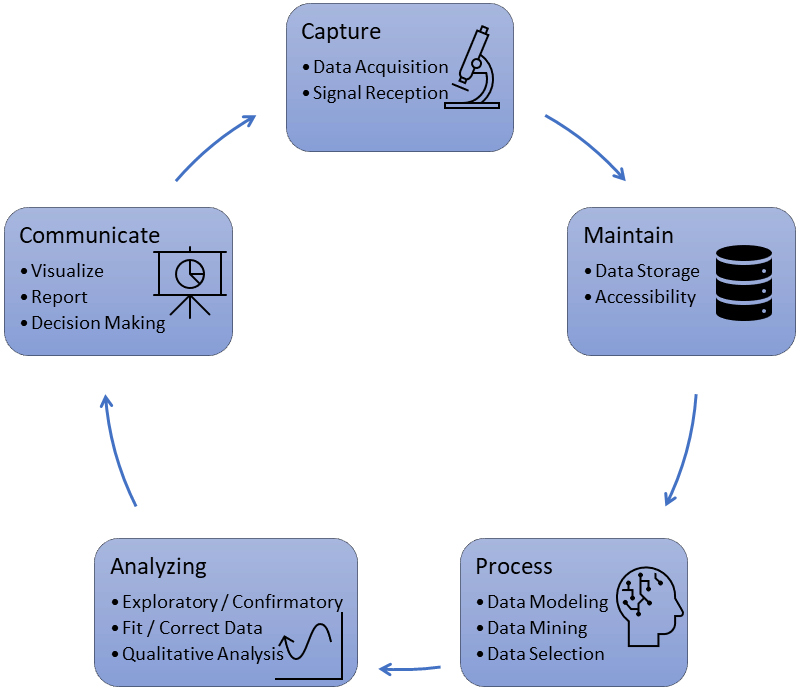
Fig. 7 Data Lifecycle (see https://datascience.berkeley.edu/about/what-is-data-science/)
Timeline
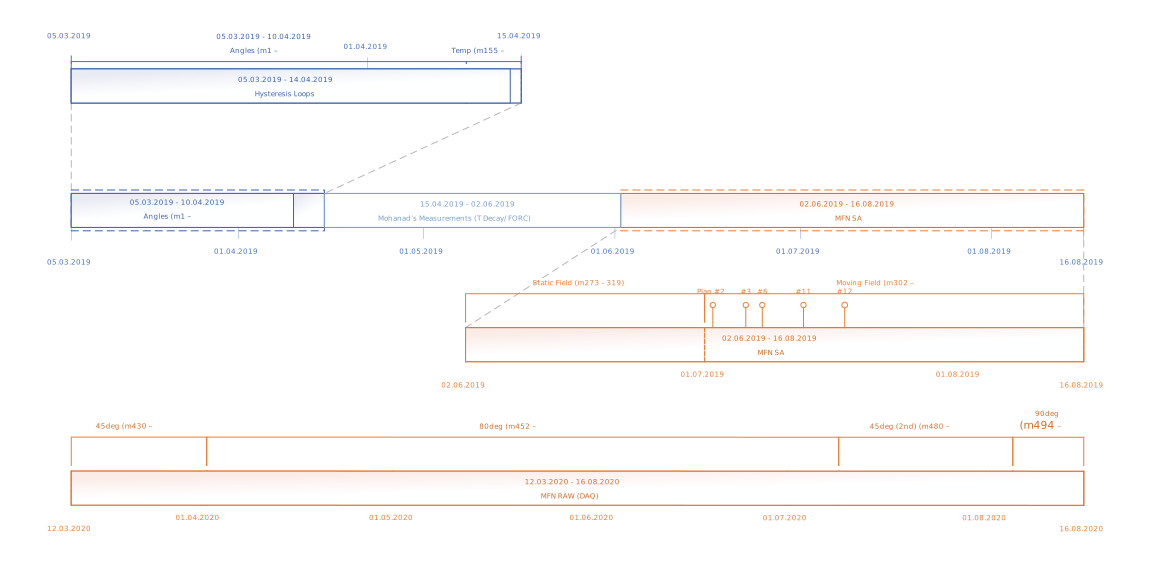
Fig. 8 Project Timeline
Measurement Setup
Most of the measurements are using the gradiometry setup:
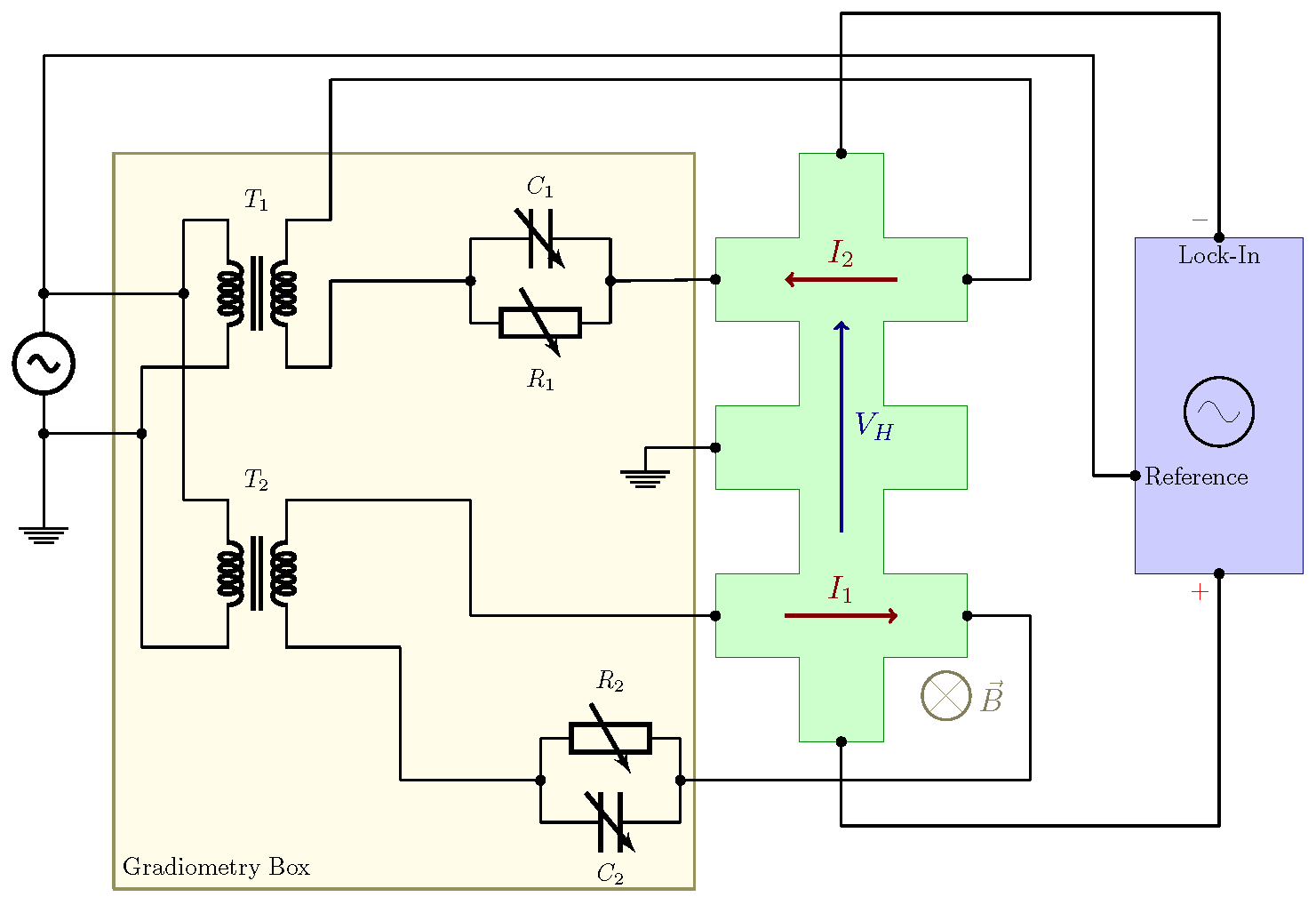
Fig. 9 Gradiometry Measurement Setup
Adjustable Parameters
Every parameter can have a crucial influence on the measurement. Therefore together with each measurement the corresponding used parameters are documented.
Measurement Parameters
The following parameters can be adjusted:
Parameter |
Description |
|---|---|
T |
Temperature of the sample |
θ |
Angle between sensor and magnetic field |
Type |
Measurement Type (Gradio/Hloop/MFN). Determines \(I_1\) and \(I_2\) |
\(I_1\) |
Hall bar connection of \(I_1\) |
\(I_2\) |
Hall bar connection of \(I_2\) |
Gate |
Gate grounding (w/ one bar connection) |
\(R_1\) |
see Gradiometry Setup above |
\(R_2\) |
see Gradiometry Setup above |
\(C_1\) |
see Gradiometry Setup above |
\(C_2\) |
see Gradiometry Setup above |
Magnet Parameters
Parameter |
Description |
|---|---|
\(B_{ext}\) |
External field [T] |
sweep |
Sweeping the field? |
SR |
Sweeprate of the field [mT/min] |
\(dB_{ext}\) |
Fieldrange [T] |
Lock-In Parameters
The programmable Lock-In SR830 can be used in various settings:
Parameter |
Description |
|---|---|
\(f_{ref}\) |
Reference Frequency for the signal generator |
\(V_{in}\) |
Input Voltage |
τ |
Time Constant (lowpass filter) |
sens |
Sensitivity: Highest measurable voltage (-sens < \(V_H\) < +sens) |
Float/Ground |
Grounding the signal. Default: Ground |
AC/DC |
AC-Coupling. Default: AC |
A/A-B |
Input to use. Default: A-B |
Reserve |
Noise-Reserve. Default: Normal |
Source |
\(f_{ref}\) Source. Default: Internal |
Noise Parameters
Signal Analyzer (SR785)
Parameter |
Description |
|---|---|
\(f_{max}\) / Freq-Span |
Maximum frequency in the power spectral density |
Avg |
Number of averages to sample over |
Pre Amplifier (SR560)
Parameter |
Description |
|---|---|
Gain Mode |
Default: Low |
Gain |
Default: 200 |
Coupling |
Default: AC |
Output (50 Ω) |
Default: LI Input A |
Filters |
Default: Off |
Data Aquisition (DAQ)
Parameter |
Description |
|---|---|
\(f_{sample}\) / Rate |
Sampling Frequency [samples / second] |
Avg |
Number of averages to sample over |
\(f_{max}\) / Freq-Span |
Maximum frequency in the power spectral density |
|
Sample a part of the signal according to \(f_{sample}\) |
|
With |
filtering signal |
see SpectrumAnalyzer |
|
Adding 0 for missing values |
Todo
implement zero_padding (currently different length measurements result in data loss. See <http://gitlab.com/ody55eus/ana/-/blob/master/ana/mfn.py#L223>)
Sensor Details
This sensor is old fabicated by Merlin Pohlit. It has 3 \(\mu\) m cross size.
It has been handed to Fabrizio Porrati to grow these structures shown below
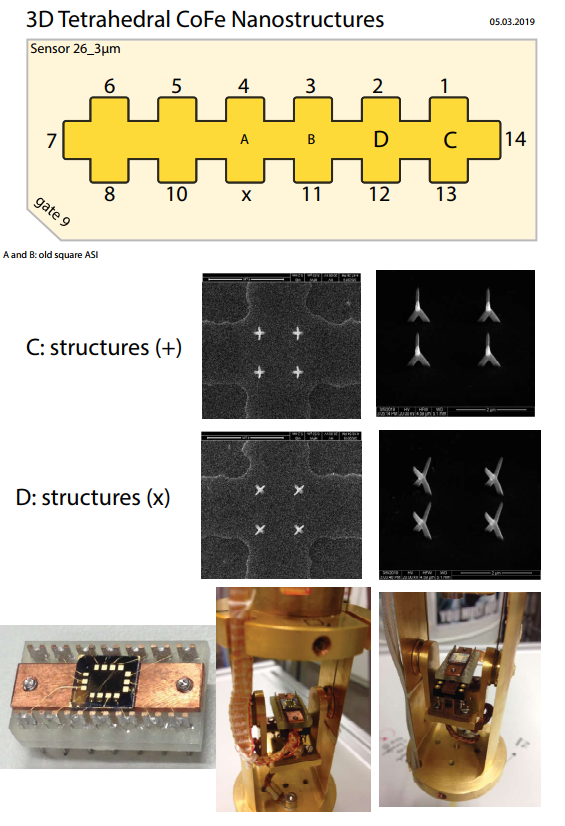
Fig. 10 Sensor Details
3D Nanostructures
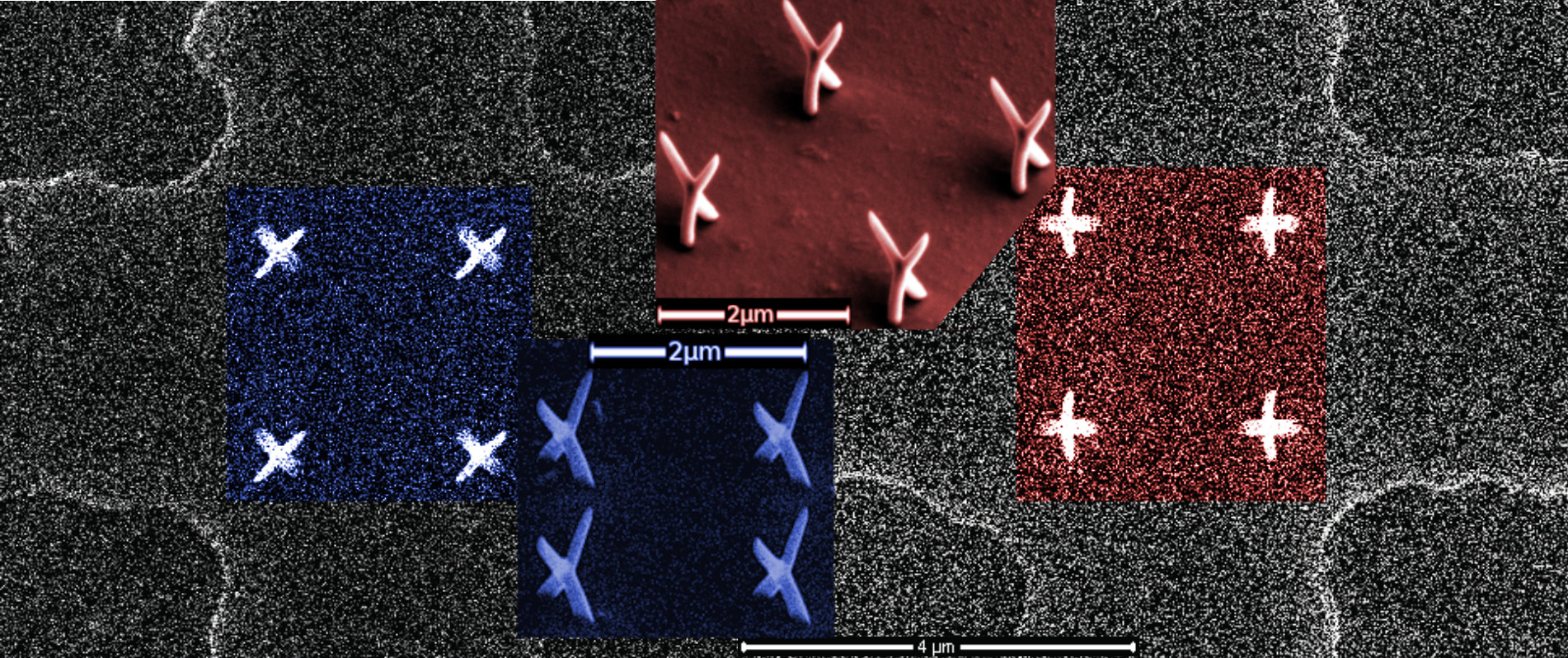
Fig. 11 Nano-Tetrapods deposited on top of the Hall sensor.
Cryostat
Loading the sample inside Janis
- Author
Mohanad
- Date
06 March 2019
Warning
We had problem when we introduced and exchange gas. The temperature was around 200K and we introduced 1mbar for 1s. The process of cooling was very fast and we lost a lot of He(l). The cooling rate was very high and we reached 4k in 1.5 hour. That was not good and we should next time wait at least one day to cool naturally and then intorduce an exchange gas.
Important
Don’t introduce exchange gas too early ( \(T > 200 K\) )
Be careful and introduce as little exchange gas as possible